Jennifer Jo Thompson (University of Georgia)
Each summer since 2014, I’ve taught anthropology on the road with the University of Georgia’s Interdisciplinary Field Program (IFP)—a domestic field program in which undergraduates spend 8 weeks on the road studying geology, ecology, and anthropology.
Unlike a classroom-based course, IFP requires students to engage with the material through interdisciplinary and experiential learning. For the anthropology courses—either Intro Anthro or an upper-division Anthro of North America—students visit archaeological sites, national park cultural sites, and native-run cultural centers. They develop skills in taking on-site fieldnotes and then build critical reflections based on their observations. Among the most powerful moments are students’ reflections on the embodiment of inequalities that result in social and health disparities disproportionately experienced by those from minoritized groups. Over the years, I’ve discovered that one of the best ways to teach this is through the lens of food.
The theme of food is woven throughout the course, but three field stops really stand out for the way they make tangible core concepts in anthropology and provide opportunities for interdisciplinary connections with the ecology and geology courses.
Departing from Athens, Georgia, we spend the first week on Sapelo Island, a barrier island off the coast of Georgia. Ninety-seven percent of Sapelo Island is state-owned; it is home to a National Estuarine Research Reserve and the UGA Marine Institute, as well as numerous archaeological sites—including a Late Archaic shell ring that bears the refuse from over 1000 years of daily, seasonal, and sometimes ceremonial meals enjoyed by indigenous communities (Thompson 2007), and tabby plantation ruins constructed by enslaved people originating from West Africa, brought to the island via the Caribbean to work rice, cotton, and sugarcane plantations (Honerkamp and DeVan, 2008). Visiting these sites, food becomes a lens to consider deep and more recent history: social structure and community, shelter and subsistence, celebration and ceremony, resilience and adaptation.
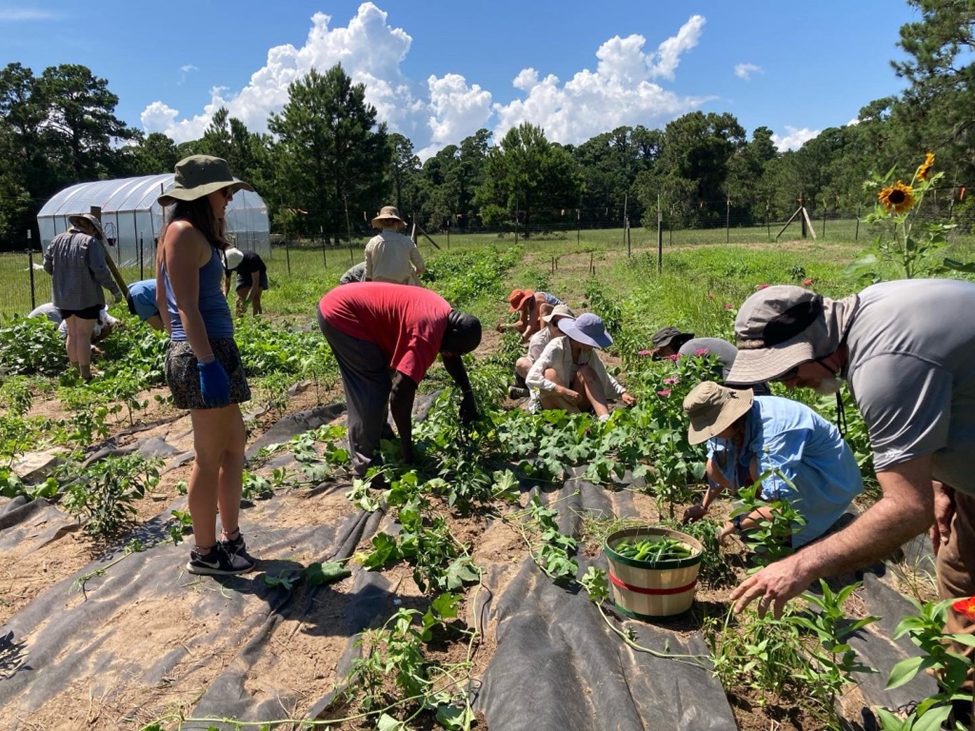
The remaining 427 acres of Sapelo Island make up the community of Hogg Hummock, one of the “most intact” Gullah-Geechee communities remaining in the U.S. (Hardy & Heynen, 2022), with approximately 50 full-time residents. For over 200 years, the Saltwater Geechee of Sapelo have sustained culture and community using traditional agroecological knowledge passed down from their West African ancestors, along with knowledge developed from generations living on Sapelo Island itself (Bailey, 2000). Over the last century, the Hogg Hummock community has experienced what Hardy et al. (2022) term a “double dispossession” driven both by continued economic disenfranchisement and sea-level rise due to climate change, which together threaten the community’s cultural and agricultural heritage. Students practice thinking anthropologically while working with Save Our Legacy Ourself (SOLO), a local non-profit organization focused on cultural preservation through the cultivation of heritage crops on agricultural plots in the Hogg Hummock community. As they learn about SOLO’s collaboration with Shell to Shore, a non-profit organization that is collecting oyster shells from local restaurants to revitalize oyster beds that serve as a living shoreline and nature-based solution to sea level rise, food also becomes a lens for learning about climate adaptation and resilience. After a decade of bringing students to Sapelo, I have been struck by the depth of learning they experience after spending just a few hours connecting with the local community.
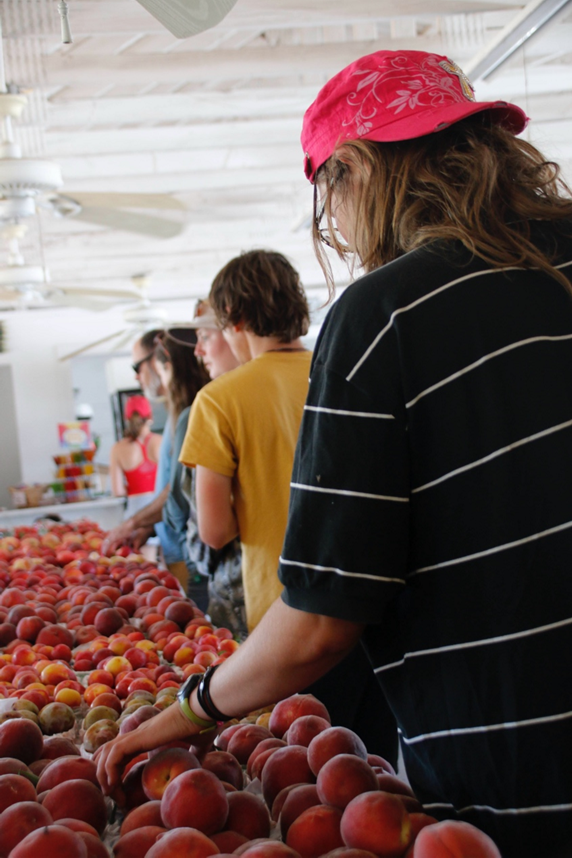
Midway through the summer IFP is in California, making our way from Yosemite to the Bay Area. It’s a long driving day. Mid-afternoon, we often stop at a farm stand in the Central Valley. The day is hot and the fresh fruit is refreshing. Students pile out of the vans and purchase peaches, plums, strawberries—freshly picked, most likely by migrant laborers, from fields that produce 25% of the Nation’s food on less than 1% of its farmland (USGS, n.d.). As students enjoy their purchases, food becomes a lens for learning about labor and migration, as we discuss border and trade policies, the embodiment of ethnic and racial hierarchies, and the naturalization of social suffering facing agricultural laborers (Holmes, 2013). Connecting anthropology with ecology and geology topics, we also consider the effects of drought and agricultural water use, which is driving visible subsidence of the Valley floor—a phenomenon putting drinking water, human and non-human communities, as well as agricultural production at risk.
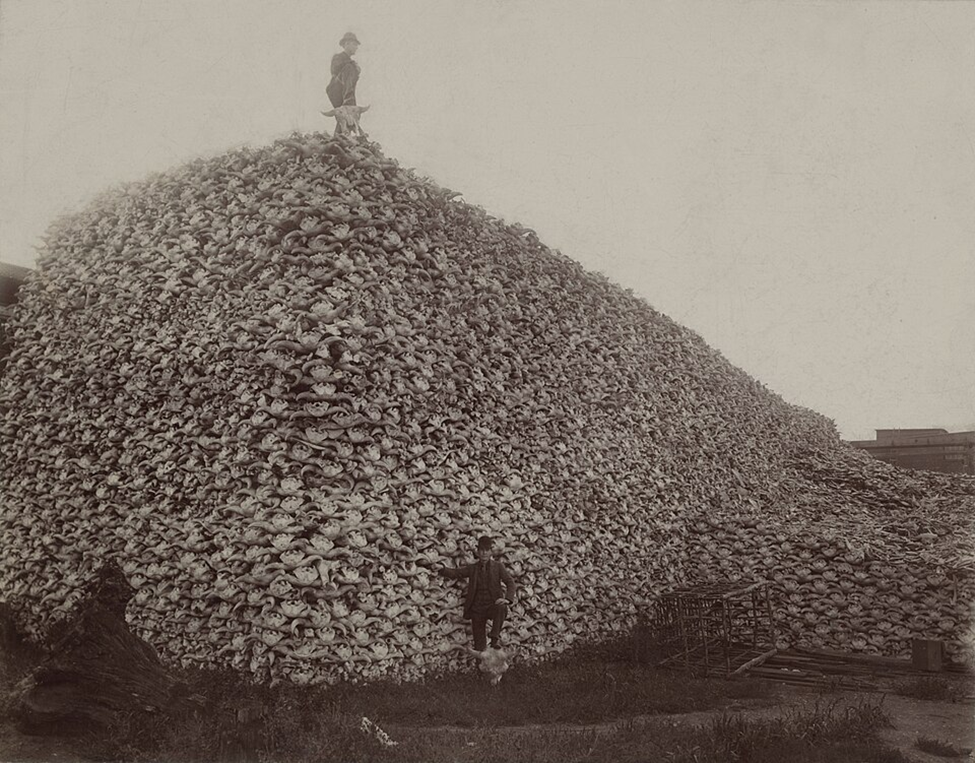
In our last few weeks of the summer, we head east on MT-200, making our way from Idaho to Glacier National Park. We stop at the Bison Range, now managed by the Confederated Salish and Kootenai Tribes of the Flathead Reservation. Here, we talk about the 19th century decimation of the bison, a key part of the US Government’s strategy for containing the “Indian Problem”, which eliminated a critical food source and effectively drove Western indigenous communities off their land and onto reservations (King, 2012). Here, food becomes a lens for discussing social and environmental justice, as well as distinctions between genetic difference, race as a social construct, the biological effects of racism, and the embodiment of social inequalities (Gravlee, 2009). Making our way through these difficult topics, we conclude with discussion about indigenous sovereignty, the restoration of the Bison Range to the Tribes, and emergent food sovereignty movements among indigenous communities (Mihesuah and Hoover, 2019).
These are just few of the many places food shows up as a lens for teaching anthropology, alongside geology and ecology, on the road. As a final assignment, students write an IFP Ethnography. Inevitably, each year food makes an appearance—not just what we eat, but when and how, the social rules and the ritual practices that emerge from eight weeks and 12,000 miles across the US.
References Cited:
Bailey, Cornelia. God, Dr. Buzzard, and the Bolito Man: A Saltwater Geechee Talks About Life on Sapelo Island. Doubleday Books, 2000.
Gravlee, Clarence. “How Race Becomes Biology: Embodiment of Social Inequality.” American Journal Of Physical Anthropology 139, no. 1 (2009): 47–57.
Hardy, Dean, Maurice Bailey, and Nik Heynen. ““We’re Still Here”: An Abolition Ecology Blockade of Double Dispossession of Gullah/Geechee Land.” Annals of the American Association of Geographers 112, no. 3 (2022): 867–76.
Hardy, Dean, and Nik Heynen. ““I Am Sapelo”: Racialized Uneven Development and Land Politics within the Gullah Geechee Corridor.” Environment and Planning E: Nature and Space 5, no. 1 (2022): 401–25.
Holmes, Seth. Fresh Fruit, Broken Bodies: Migrant Farmworkers in the United States. Vol. 27: Univ of California Press, 2013.
Honerkamp, Nicholas, and Rachel L DeVan. “Pieces of Chocolate: Surveying Slave and Planter Life at Chocolate Plantation, Sapelo Island, Georgia.” In The African Diaspora Archaeology Network, 2008.
King, Gilbert. “Where the Buffalo No Longer Roamed.” Smithsonian Magazine, 2012.
Mihesuah, Devon A, and Elizabeth Hoover. Indigenous Food Sovereignty in the United States. University of Oklahoma Press, 2019.
Thompson, Victor D. “Articulating Activity Areas and Formation Processes at the Sapelo Island Shell Ring Complex.” Southeastern Archaeology 26, no. 1 (2007): 91–107.
USGS. “California’s Central Valley.” https://ca.water.usgs.gov/projects/central-valley/about-central-valley.html.

 FoodAnthropology