
Ariana Gunderson
Greetings from the field! I’m in Leipzig, Germany for a year to conduct my dissertation fieldwork on fake meat and changing tastes. Soon after I arrived, I realized I wanted to grocery shop alongside my interlocutors, and I gave it a try with a good friend here in Leipzig.
For this methods dry-run, we arranged a time to go grocery shopping, and as soon as we walked in the door of the supermarket, I started audio-recording. I followed his lead around the store, as he explained what products he was searching for that day and lingered in front of this or that shelf. I asked questions about what he chose or thought about the foods he was considering, and I casually narrated the activity to get it onto the tape (e.g.: oh, you’re looking at the dumplings? Hmm, yes, getting those…). When he made a vaguely evaluative comment about an item, I tried to ask clarifying questions when possible (e.g.: “plums from Italy! Tjah….” “Hmm, you mean they’re from far away?”).
I took a picture of the final items on the checkout belt, and after we parted ways, I went back inside the grocery store and photographed each shelf we had stopped at. I immediately went to my office and wrote fieldnotes, as detailed as possible, describing everything I remembered, especially the sensory details that wouldn’t have been captured by the audio tape and the emotional reads I had throughout the shop-along. I then transcribed the audio recording in Microsoft Word and dropped in photographs to the document, annotated with red dashed line boxes to highlight what we talked about.
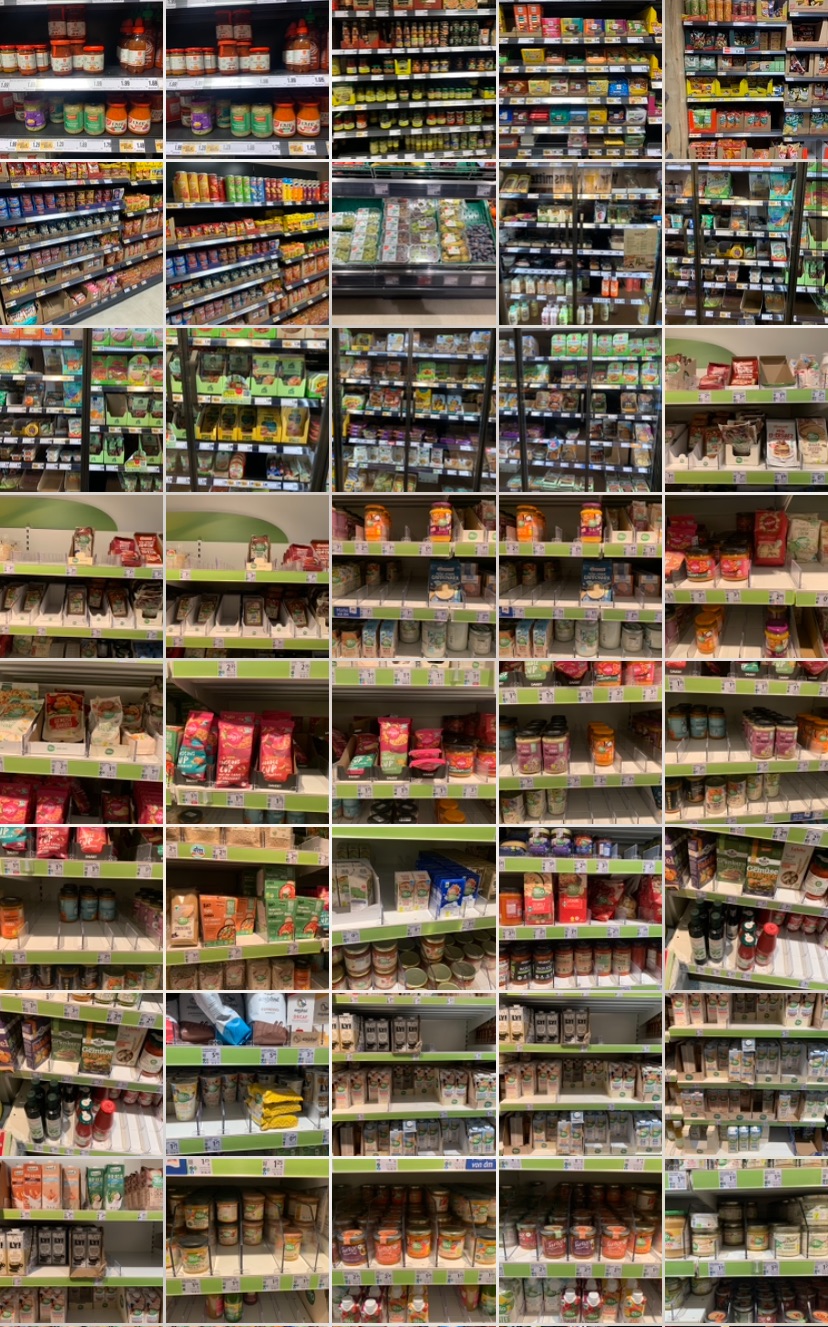
I was fairly pleased with this first attempt at a grocery shop-along, but I knew I couldn’t be the first anthropologist to go down this path and sought to benefit from the wisdom of experience. I reached out to the steadfast SAFN email list for their sage advice, which turned out to be just the right place to ask! Here are excerpts from the advice I received on the SAFN email list (which you can join by following these instructions!):
Ellen Messer advised me to include in my notes comparisons between the German and US contexts – how do grocery stores, ideas about organic food, and nutritional beliefs/practices differ across these contexts?
Christine Hippert gave advice from her research for her recent book, Not Even a Grain of Rice: Buying Food on Credit in the Dominican Republic, writing, “My recommendation is that ethnographers should pay particular attention and focus on people in shopping environments. Others in the shopping experience can affect people’s decisions about what, how, and how much they purchase. For example, people who offer food samples in grocery stores, or interactions shoppers have with personnel in different sections of the store (e.g., bakery, butcher, produce aisle) all affect shoppers’ experiences and decisions. Additionally, in my own fieldwork, there were countless encounters of shoppers hearing about a recommendation from another shopper so, in the moment, this encounter affected their purchase.”
Richard Zimmer encouraged attention to shopping lists, the store’s layout and stocking patterns, and industry best practice for shelf design.
And Elin Linder shared tips from her master’s thesis on how to focus on the (multi-) sensorial and temporal in grocery shop-alongs, while audio recording and jotting haptic and olfactory sense notes:
“Treat the aisle as a sensory interview room.” I had success asking hyper-concrete, sense-first prompts in front of specific shelves (“What tells you this is good?” “If you pinch/smell/look at this, what are you checking for?”). These micro-elicitors reliably opened narratives about skill, habit, and care that didn’t surface in seated interviews.
Follow the participant’s tempo—pause on decisions. Many of the richest reflections came in small hesitations (reaching, comparing, putting back). Staying quietly co-present during those pauses often prompted “thinking-out-loud” talk that the audio recorder picked up beautifully. I treated these low-voice asides as data about embodied reasoning.
Attend to the store’s “ambient actors.” Lighting, refrigeration hum, packaging textures, and price tags all acted on decisions. Noting these as part of the transcript (e.g., bright top-lighting over produce; cold air by dairy; rattling trolley wheels) helped me analyze how surroundings shape what counts as edible, fresh, or trustworthy in the moment.
Link shop-along moments to home practices. Because my fieldwork moved between stores and kitchens, I made quick bridges on previous research encounters to deepen/prompt reflections and embodied understandings. These links showed how selection criteria are carried into cooking, eating, and even wasting, making the shop-along one episode in a longer sensorial chain.
Photograph what the transcript points to. Your annotated shelf photos are spot-on. I shot only those sections participants actively referenced while speaking; later, pairing image + utterance clarified how packaging cues, shelf order, and category boundaries structured choice.
Make boundaries discussable. I routinely invited people to locate lines—fresh/not fresh, real/artificial, worth it/wasteful—right there at the shelf. These boundary talks revealed moral and temporal dimensions (“weekday vs. weekend quality,” “kids’ vs. adults’ food”) that organized the cart.”
Many thanks to all who shared their advice, and happy shopping!

 FoodAnthropology